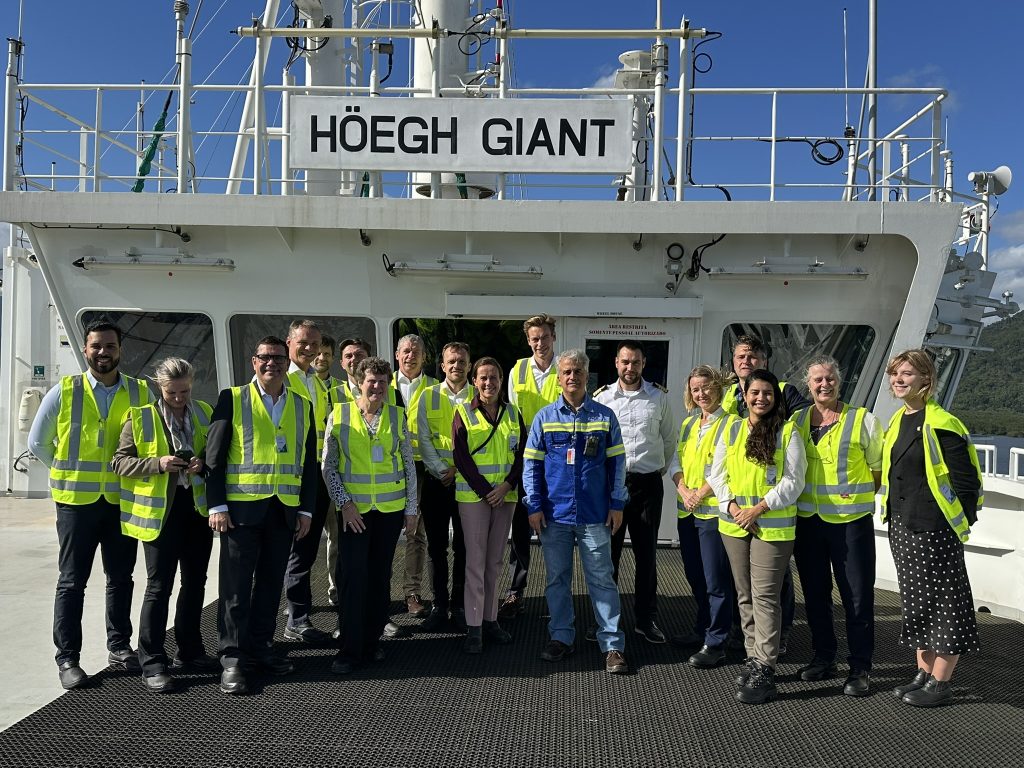







During ROG.e week, the association welcomed ANTAQ, brought Norwegian shipowners together and, alongside FGV Rio Law and the Norwegian Consulate General, held the seventh Brazil–Norway Seminar.
ROG.e 2026 week highlighted the strength of Norway’s maritime presence in Brazil. Through meetings at Riocentro and its own programme of discussions, ABRAN brought companies, authorities and institutions from both countries together to address issues already shaping the future of shipping: regulatory predictability, investment, operational safety and emissions reduction.
As the representative of Norwegian shipowners in Brazil, ABRAN brought the experience of companies engaged every day in shipping and offshore operations to these conversations. The aim was to connect climate goals with practical decisions about vessels, fuels, infrastructure and contracts.
Dialogue with ANTAQ at ABRAN’s Headquarters
The programme began on Sunday, 20 September, with Consul General Trond Gabrielsen welcoming the Norwegian delegation to Rio de Janeiro. On Monday, ABRAN hosted Vice Admiral (Ret.) Wilson Pereira Lima Filho, a Director of Brazil’s National Waterway Transport Agency (ANTAQ), for a meeting with representatives of its member companies.
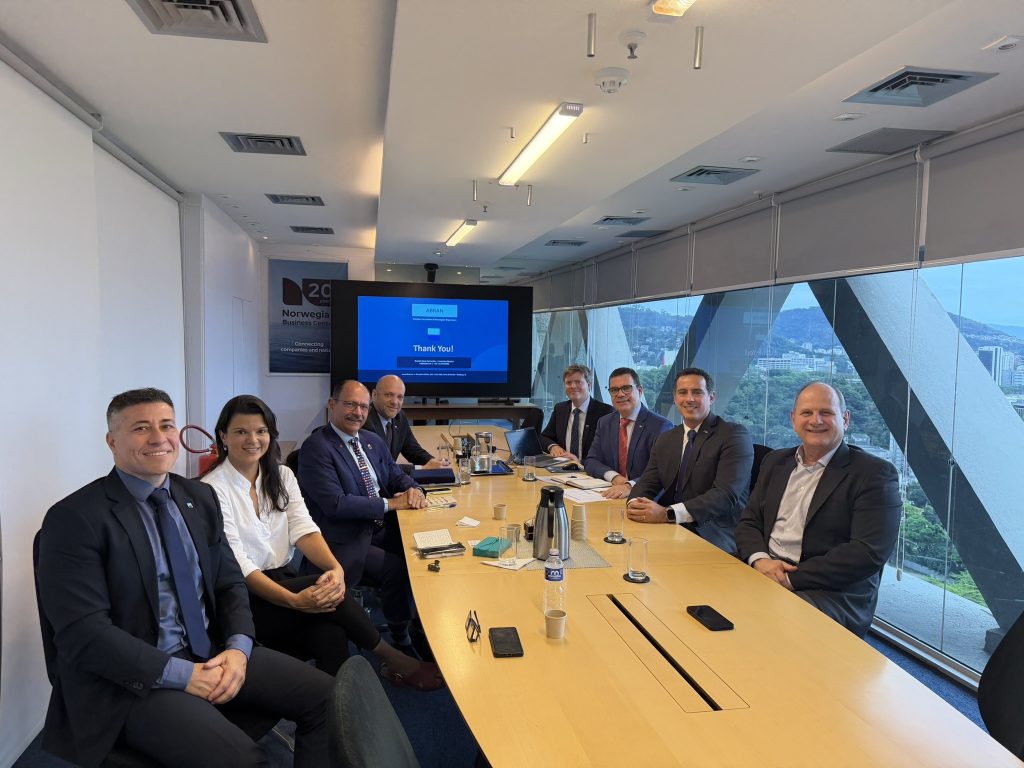
Participants discussed regulatory challenges in shipping and offshore support, including the application of chartering rules. For shipowners, clear criteria and predictable procedures are essential to planning the mobilisation of specialised vessels and supporting long-term investment. The meeting continued ABRAN’s work of providing ANTAQ with data, operational experience and proposals to improve the regulatory framework.
Later that day, the opening of the Norwegian Pavilion at ROG.e showcased the Norwegian companies and institutions taking part in the exhibition. The meeting at ABRAN’s headquarters and the activities at Riocentro reflected two aspects of the association’s work: contributing to decisions that affect the industry and expanding opportunities for business cooperation.
The Seventh Brazil–Norway Seminar: From Climate Goals to Implementation
On Tuesday, 22 September, ABRAN, FGV Rio Law and the Royal Norwegian Consulate General held the Seventh Brazil–Norway Seminar under the theme Advancing Climate Goals in the Maritime Sector. The event brought together authorities, researchers and business representatives to examine how climate commitments can become viable solutions for shipping.
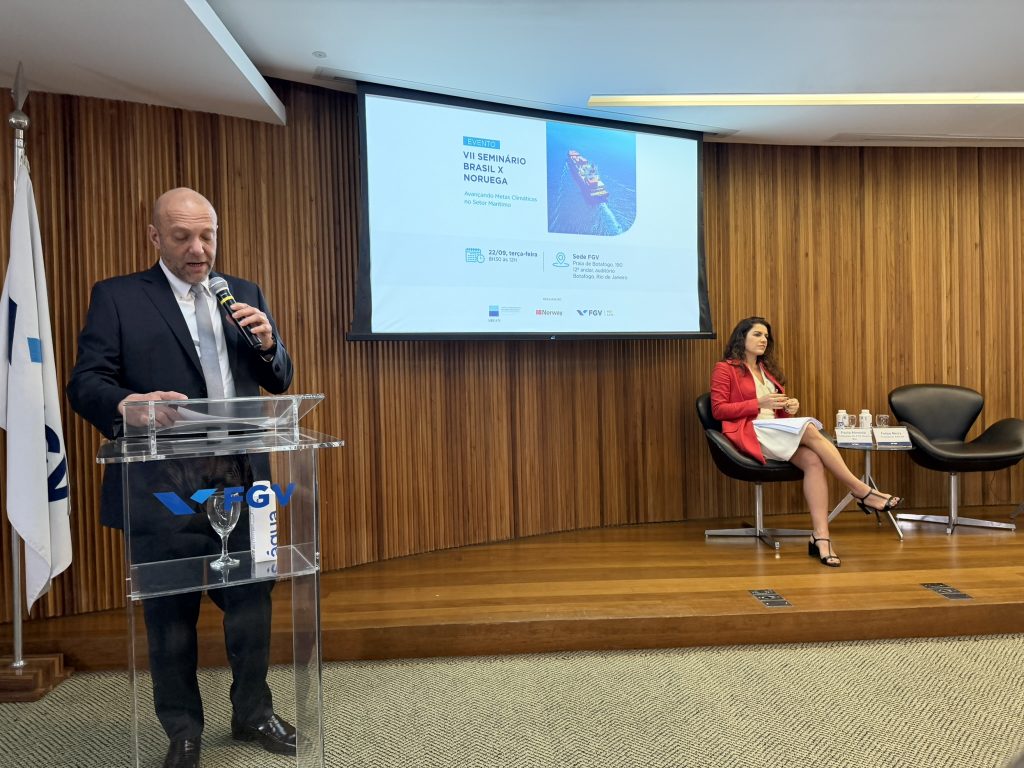
The opening featured Professor Antônio Porto, Vice Dean of FGV Rio Law; Felipe Meira, President of ABRAN; and Trond Gabrielsen, Norway’s Consul General in Rio de Janeiro. Otto Burlier, National Secretary for Waterways and Navigation at Brazil’s Ministry of Ports and Airports, presented the federal government’s perspective. Professor Paula Wojcikiewicz Almeida of FGV then discussed the legal challenges surrounding the EU–Mercosur agreement and the effects of European environmental policies on trade with other countries. Her presentation addressed the provisional application of the interim trade agreement since May 2026.
The first panel, moderated by Camila Mendes Vianna Cardoso, examined the international context and Brazil’s response to maritime decarbonisation. Vice Admiral André Coronha Macedo, Director of Ports and Coasts, stressed that the transition must combine environmental effectiveness, economic viability and safety. Director Wilson Lima Filho discussed ANTAQ’s regulatory work and national initiatives under development. Representing Petrobras, Fernanda Mussi explained how fleet management, procurement criteria and new technologies can reduce emissions from offshore support vessels.
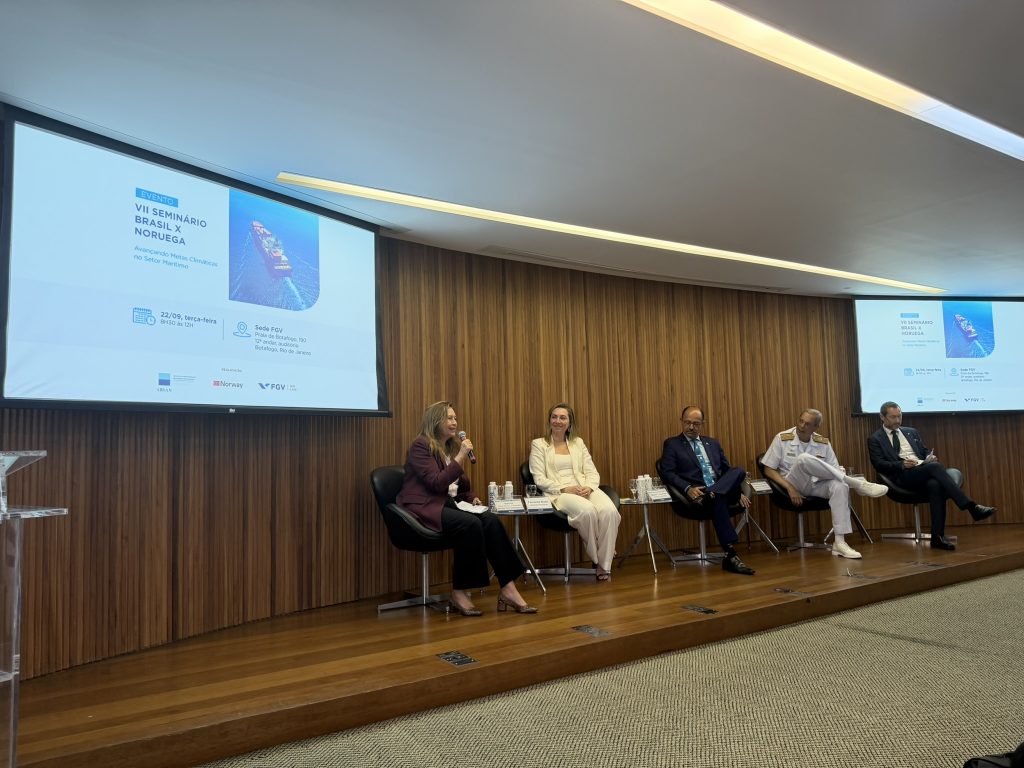
The examples gave a sense of the scale of the challenge. According to Fernanda Mussi, vessels account for approximately 10% of the emissions covered in Petrobras’ presentation. Measures discussed included route optimisation, monitoring of efficiency indicators and requirements for the contracting of 30 new offshore support vessels with hybrid systems and engines capable of operating on two fuels.
In the second panel, moderated by Fernanda Sarmento of DNV, the discussion moved from policy direction to investment and operational choices. DNV also contributed a technical perspective on adopting new solutions. Captain Jones Soares presented Transpetro’s fleet decarbonisation roadmap. The company reported 110 projects implemented, an investment of BRL 37 million and an estimated 55,000 tonnes of CO₂ equivalent avoided between 2022 and 2025. His presentation also covered biofuels and a project to supply shore power to vessels berthed at the São Sebastião Terminal.
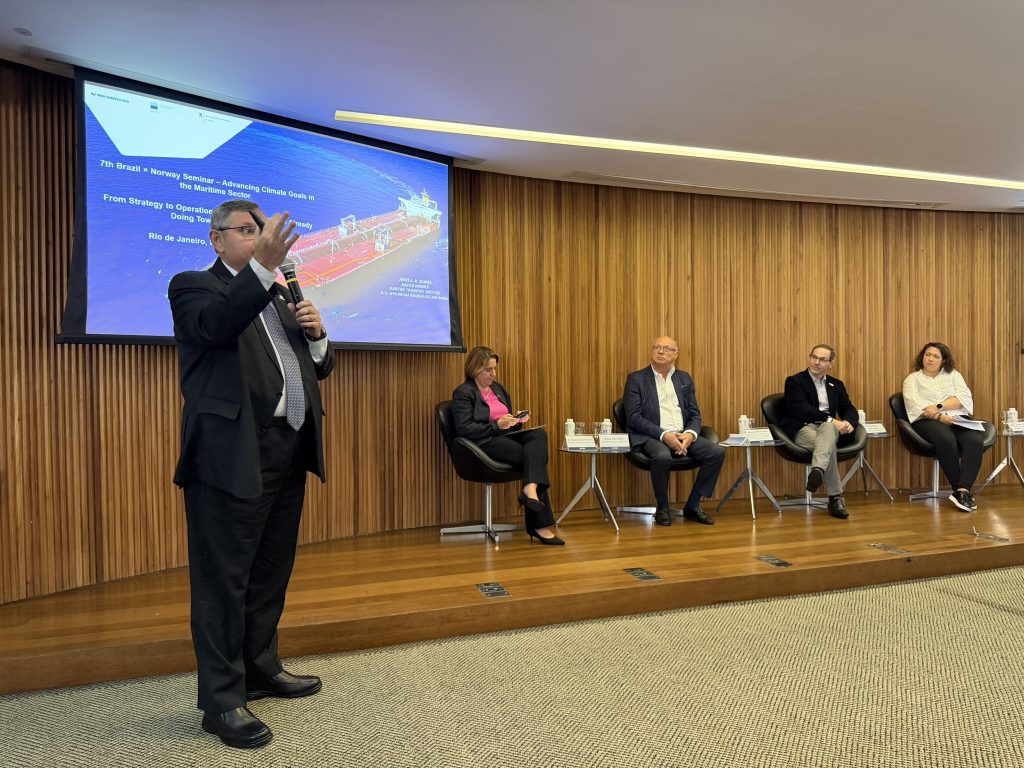
Representing Odfjell SE, Knut Øvrebø showed how energy efficiency and sustainable fuels can advance together. The company reported a 54% reduction in its fleet’s carbon intensity compared with 2008 and described a transatlantic voyage by Bow Olympus using suction sails and sustainable biofuel. Øvrebø also detailed Odfjell SE’s initiative on a Brazil–Europe route, with biofuel bunkering in Rio Grande under a long-term supply agreement with Petrobras.
Alexandre Fachin presented Petrobras’ climate strategy, its investments in the energy transition and its development of lower-carbon products. Elisabeth H. Sandnes of Evigo closed the presentations with a crucial point for shipowners: regulation can set the direction, but projects move forward only when they have reliable information, technical feasibility and a clear allocation of costs, risks and benefits among the parties involved.
This was the seminar’s central message. No single solution suits every vessel or operation. Fuel and technology choices depend on the route, vessel type, available infrastructure, safety requirements and the ability to turn a proposal into an investment. By bringing regulators, customers, suppliers and shipowners into the same conversation, ABRAN helped connect those decisions.
A Programme That Continued Beyond the Seminar
After the seminar, ABRAN hosted a lunch in honour of Norway’s new Consul General, Trond Gabrielsen, attended by members of his team, representatives of Innovation Norway and partners of the association. Tuesday’s programme continued with the Arctic and Kincaid cocktail reception.
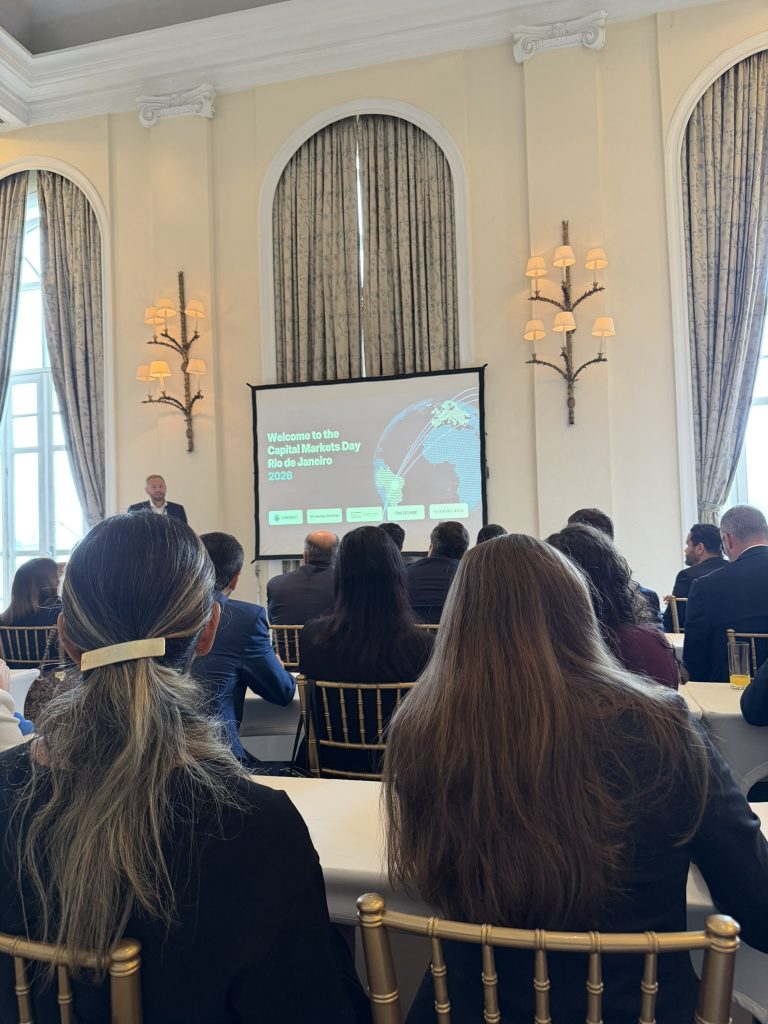
On Wednesday, the agenda included an event organised by Euronext at the Copacabana Palace on opportunities for Brazilian companies to access European capital markets and finance international growth. Ventura Offshore shared its experience of listing in Norway in a discussion with investors and industry specialists. ABRAN’s programme continued with meetings between Brazilian and Norwegian representatives, while ROG.e remained open at Riocentro through Thursday, 24 September.
For ABRAN, the week brought together areas of work that must progress in tandem. Regulatory dialogue gives companies greater predictability; industrial cooperation creates opportunities to test and scale solutions; and forums such as the Brazil–Norway Seminar allow authorities and industry to discuss, drawing on real experience, what is needed to accelerate the transition.
Norwegian shipowners’ presence in Brazil is reflected in vessels, technology, jobs, services and investment. By representing these companies and building bridges with Brazilian institutions, ABRAN works to ensure that the Brazil–Norway partnership continues to deliver results for safer, more efficient and lower-emission shipping.